Commercial Hood and Vent Cleaning Services in Dallas
NFPA-compliant kitchen exhaust system cleaning including hoods, filters, ducts, and fans. Our thorough cleaning removes dangerous grease buildup, reduces fire hazards, and improves ventilation efficiency for a safer kitchen environment.
Professional hood and vent cleaning services for restaurants in Dallas and surrounding areas. We deliver exceptional results that keep your establishment clean, safe, and ready for operation.
Hood and Vent Cleaning Services in Dallas
Kitchen exhaust hoods and ventilation systems represent critical safety infrastructure in commercial restaurants. These systems capture heat, smoke, grease-laden vapors, and cooking byproducts, maintaining air quality and preventing dangerous accumulation that creates fire hazards. Professional hood and vent cleaning services ensure your ventilation system functions safely and efficiently while meeting stringent fire code and insurance requirements.
The Critical Nature of Exhaust System Cleaning
Commercial cooking generates substantial quantities of grease-laden vapors that deposit throughout exhaust hoods, ductwork, and fans. This accumulation creates significant fire hazards—the National Fire Protection Association (NFPA) identifies cooking equipment as the leading cause of restaurant structure fires, with inadequate cleaning being a primary contributing factor. Beyond fire safety, contaminated ventilation systems reduce air quality, create unpleasant odors, and decrease system efficiency, increasing energy costs and shortening equipment lifespan.
Dallas restaurants face particular ventilation challenges. High-volume cooking operations common in the city's diverse dining scene generate substantial grease accumulation. Hot Texas summers increase cooling loads, making efficient ventilation essential for maintaining comfortable kitchen temperatures. Additionally, Dallas's active health department inspection program evaluates ventilation system condition as part of routine inspections, making proper maintenance essential for compliance.
NFPA 96 Standards and Compliance Requirements
The National Fire Protection Association Standard 96 establishes minimum requirements for commercial kitchen exhaust system cleaning and maintenance. These standards are adopted into law throughout Dallas and surrounding municipalities, creating legal requirements for restaurant operators:
Inspection and Cleaning Frequency: NFPA 96 requires exhaust systems to be inspected regularly and cleaned whenever grease accumulations exceed specified thickness thresholds. High-volume cooking operations typically require quarterly or monthly cleaning, while lower-volume establishments may qualify for semi-annual service.
Complete System Cleaning: Standards require cleaning of the entire exhaust system including hoods, filters, ductwork, fans, and accessible components. Surface cleaning of visible areas while leaving ductwork contaminated does not satisfy compliance requirements.
Certified Service Providers: NFPA 96 recommends using trained, qualified service personnel familiar with commercial exhaust systems and proper cleaning techniques. The International Kitchen Exhaust Cleaning Association (IKECA) provides certification programs recognizing qualified professionals.
Documentation Requirements: Complete cleaning documentation including before-and-after photos, service dates, areas cleaned, and technician certification must be maintained and available for fire marshal inspection.
Access Panel Installation: Systems must include proper access panels allowing inspection and cleaning of ductwork interior. Missing or inadequate access represents a code violation requiring correction.
Comprehensive Hood and Vent Cleaning Process
Professional exhaust system cleaning follows detailed protocols ensuring complete contaminant removal:
Pre-Service Inspection
Technicians begin with thorough system inspection, documenting grease accumulation levels, system condition, and access point adequacy. This assessment determines appropriate cleaning methods and identifies any components requiring repair or replacement.
Kitchen Protection
Before cleaning begins, technicians protect kitchen equipment, surfaces, and food preparation areas from cleaning chemicals and dislodged grease. This includes covering appliances, sealing sensitive equipment, and establishing containment barriers preventing contamination spread.
Filter Removal and Cleaning
Grease filters are removed and soaked in specialized degreasing solutions that dissolve accumulated deposits. Heavily contaminated filters may require replacement if cleaning cannot restore proper airflow characteristics. Technicians inspect filters for damage that could compromise performance.
Hood Interior Cleaning
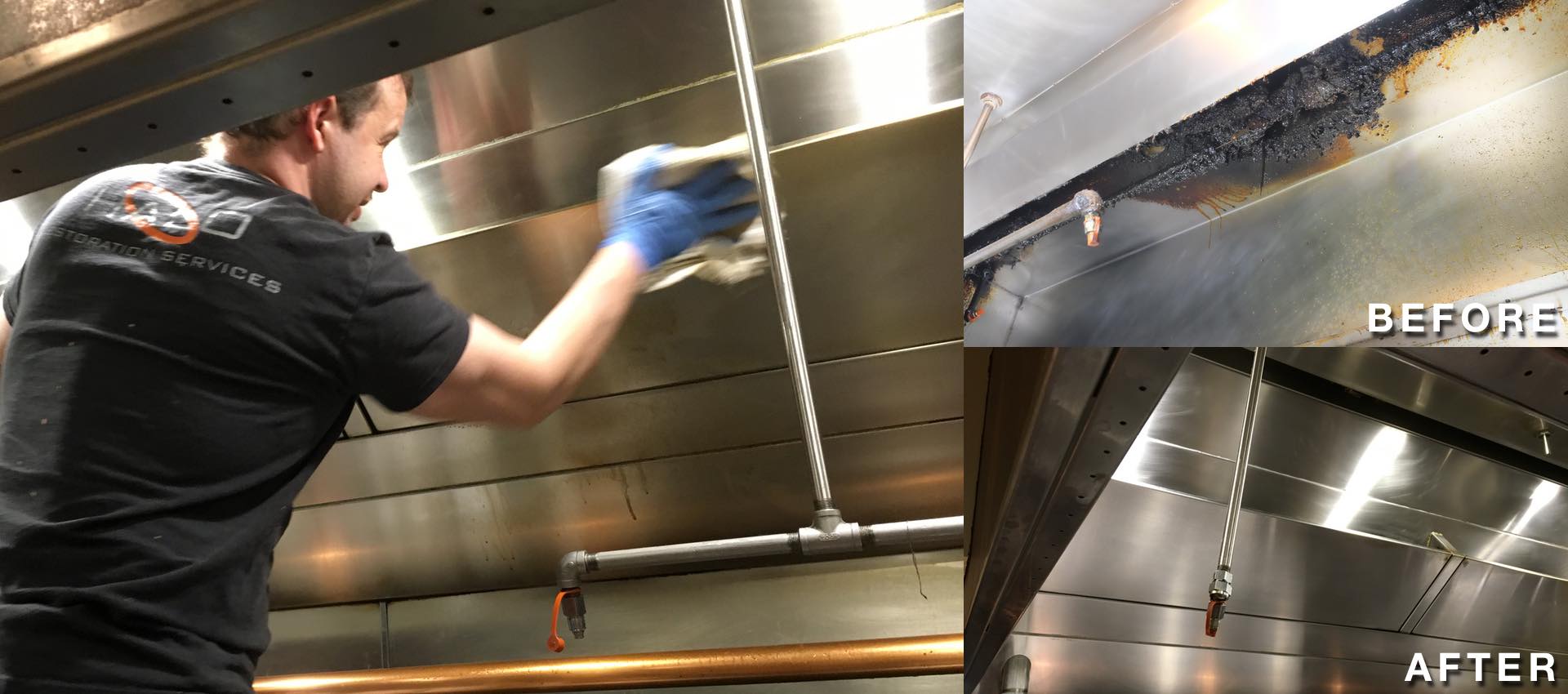
The hood interior receives detailed cleaning using scrapers, brushes, and degreasing agents designed for commercial kitchen applications. Technicians remove all accessible grease deposits from hood surfaces, edges, and penetrations where ductwork connects.
Ductwork Cleaning
Through access panels, technicians clean ductwork interiors using specialized equipment including rotating brushes, scrapers, and vacuum systems. This process removes grease deposits throughout the entire duct run from hood to exhaust point, not merely the accessible portions near the hood.
Fan Cleaning and Maintenance
Exhaust fans accumulate substantial grease deposits on blades, housings, and motors. Technicians clean all fan components, inspect belts and bearings, and verify proper operation. Fan cleaning improves efficiency while preventing motor overheating and premature failure.
System Verification and Testing
Following cleaning, technicians verify system operation including fan function, airflow characteristics, and proper filter installation. This ensures the system operates effectively following service.
Documentation and Reporting
Professional services provide comprehensive documentation including service reports, before-and-after photographs, and certification of compliance with applicable standards. This documentation satisfies insurance and inspection requirements while establishing maintenance history.
Fire Safety and Risk Management
Reducing Fire Hazards
Proper exhaust system cleaning removes the fuel source for kitchen fires. Grease deposits ignite easily and burn intensely, creating dangerous fire conditions that can spread rapidly throughout ductwork. Regular professional cleaning significantly reduces fire risk while demonstrating due diligence for insurance purposes.
Insurance Compliance
Restaurant insurance policies typically require compliance with NFPA 96 and regular professional exhaust cleaning. Failure to maintain documented cleaning schedules can result in claim denials if fire occurs, potentially exposing restaurant owners to catastrophic financial losses.
Fire Marshal Inspections
Dallas Fire Marshal offices conduct regular inspections of commercial kitchen exhaust systems. Professional cleaning with proper documentation demonstrates compliance and prevents citations, fines, or operational restrictions resulting from inspection failures.
Operational and Efficiency Benefits
Improved Air Quality
Clean ventilation systems effectively capture cooking fumes, smoke, and odors, maintaining better kitchen air quality and preventing smells from reaching dining areas. This creates more comfortable working conditions for staff and better experiences for guests.
Energy Efficiency
Grease accumulation restricts airflow, forcing exhaust fans to work harder and consume more electricity. Clean systems operate more efficiently, reducing energy costs while maintaining proper ventilation rates. Additionally, improved exhaust efficiency supports kitchen cooling systems, reducing air conditioning loads during Dallas's hot summers.
Equipment Longevity
Grease deposits on fan motors and bearings cause premature wear and failure. Regular cleaning extends equipment lifespan while reducing repair and replacement costs. Clean ductwork also prevents corrosion that can damage expensive ventilation infrastructure.
Signs Your System Needs Immediate Cleaning
Restaurant operators should watch for these warning signs indicating immediate professional service is required:
Visible Grease Drips: Grease dripping from hood edges, ductwork seams, or fan housings indicates dangerous accumulation requiring immediate attention.
Reduced Airflow: Decreased suction at hood openings suggests filter blockage or ductwork restrictions from grease accumulation.
Unusual Noises: Grinding, squealing, or vibrating from exhaust fans often indicates bearing contamination or imbalance from grease deposits.
Excessive Heat: Hot kitchen temperatures or heat radiating from hood surfaces suggest inadequate exhaust capacity from system contamination.
Persistent Odors: Cooking smells lingering in the kitchen or reaching dining areas indicate ventilation system inadequacy from grease-blocked airflow.
Choosing Professional Hood and Vent Cleaning Services
When selecting an exhaust cleaning provider in Dallas, evaluate these factors:
IKECA Certification: Look for companies employing IKECA-certified technicians demonstrating professional training and commitment to industry standards.
Complete System Capability: Ensure your provider can clean the entire system including ductwork, not merely visible hood surfaces.
Proper Equipment: Quality services use commercial-grade cleaning equipment, pressure washing systems, and vacuum collection preventing mess and contamination.
Documentation Quality: Select providers offering detailed service reports with photographs clearly showing cleaning effectiveness and system condition.
Insurance and Bonding: Verify appropriate liability insurance and bonding protecting your business from potential service-related damage.
Flexible Scheduling: Professional services accommodate your operating schedule, working during closed hours to prevent business disruption.
Maintenance Schedule Recommendations
Recommended cleaning frequency depends on cooking volume and type:
- Solid fuel cooking (wood, charcoal): Monthly cleaning required
- High-volume frying or wok cooking: Monthly to quarterly cleaning
- Medium-volume cooking: Quarterly cleaning typically sufficient
- Low-volume or steam cooking: Semi-annual cleaning may be adequate
Your professional service provider can recommend appropriate frequency based on inspection of your specific system and cooking operations.
Professional hood and vent cleaning represents essential safety maintenance for every Dallas restaurant. This investment protects your business from fire hazards, ensures regulatory compliance, maintains insurance coverage, and supports efficient kitchen operations while demonstrating your commitment to safety for staff and guests.
Benefits of Professional Hood & Vent Cleaning
Service Areas for Hood and Vent Cleaning
We provide hood and vent cleaning throughout the Dallas-Fort Worth metroplex, including:
Request a Free Quote
Get a customized quote for hood and vent cleaning services.
Related Services
Restaurant Kitchen Deep Cleaning
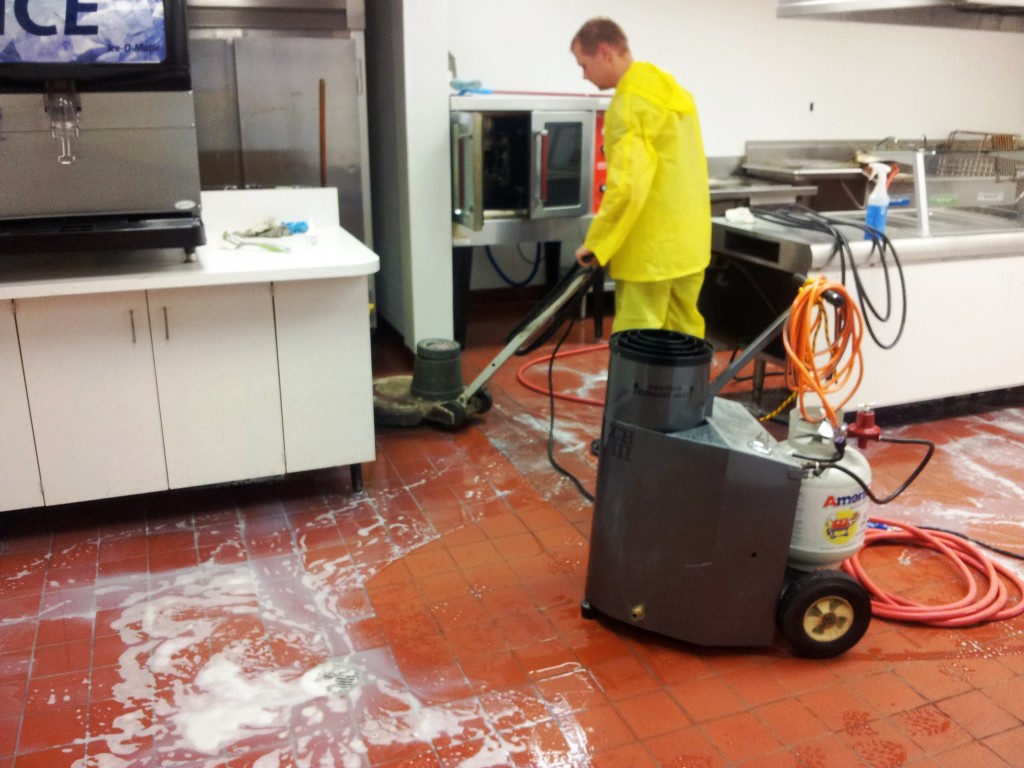
Comprehensive deep cleaning for restaurant kitchens including floors, walls, equipment, and hard-to-reach areas. We eliminate grease buildup, food residue, and bacteria to ensure a sanitary cooking environment that meets health code standards.
Grease Trap Maintenance
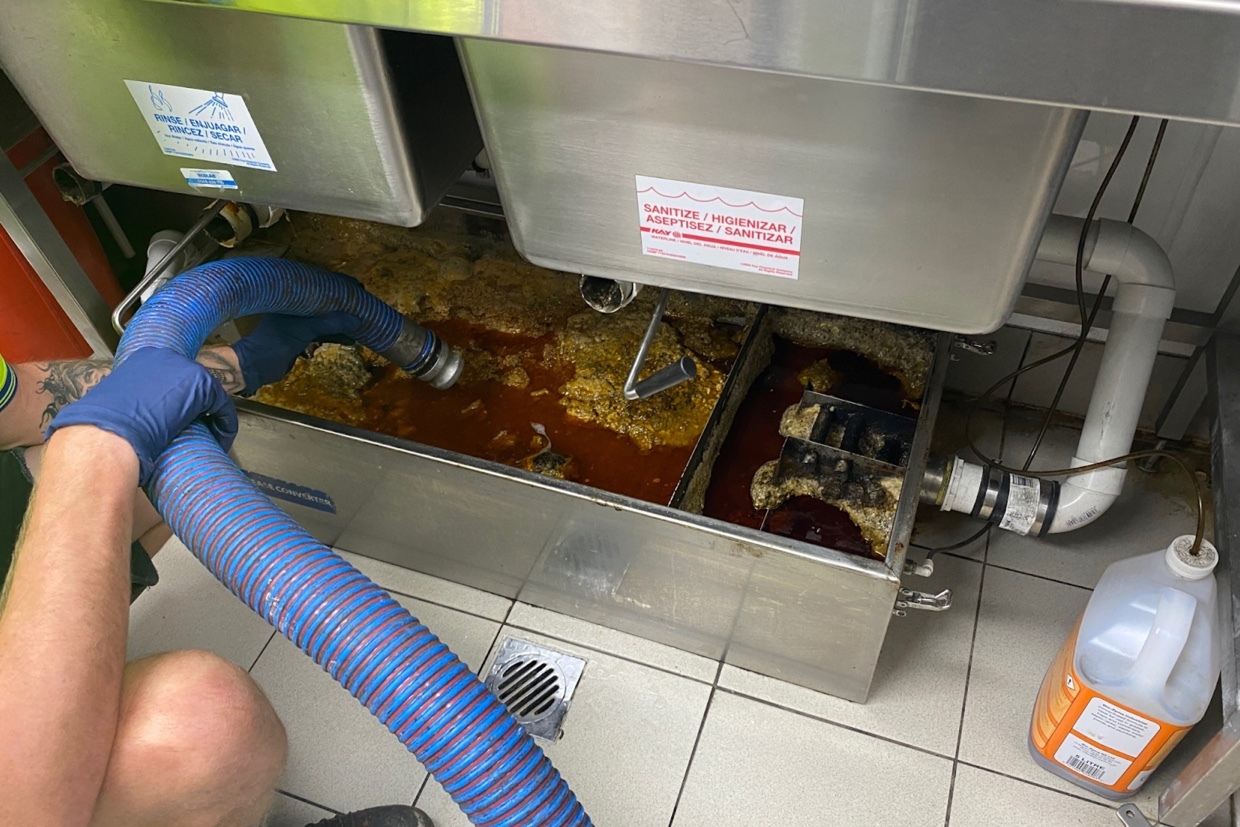
Professional grease trap pumping, cleaning, and maintenance services to prevent clogs, backups, and odors. Regular maintenance helps your restaurant stay compliant with local regulations and keeps your plumbing system running smoothly.

Dining Room Sanitization
Thorough sanitization of dining areas including tables, chairs, booths, and high-touch surfaces. We use food-safe disinfectants to create a clean, welcoming environment that keeps your customers comfortable and protected.
services planning guide
How to plan hood and vent cleaning for a food-service facility in Dallas
Restaurant Cleaning Services of Dallas uses the following planning framework to help property managers and business owners turn a request for restaurant, dining-room, and kitchen cleaning into a scope that can be walked, priced, scheduled, and checked. It is designed for practical comparison and does not replace site-specific safety, material, vendor, or regulatory requirements.
Define the Work Before Pricing It
The strongest hood and vent cleaning plan names measurable outcomes rather than relying on broad phrases such as “keep it clean.” Examples include streak-free entry glass, stocked and odor-controlled restrooms, debris-free floor edges, sanitized touchpoints, and completion before a stated opening time. A walkthrough for hood and vent cleaning is most productive when the decision-maker identifies the spaces that create complaints, the areas that carry the most traffic, and the tasks the current program misses. Those observations turn a generic checklist into a practical scope tied to the way the property is actually used. For multi-tenant or mixed-use properties, hood and vent cleaning should be divided by responsibility zone. Common areas, tenant suites, back-of-house spaces, loading areas, public restrooms, and restricted rooms can then receive schedules and approval rules that match their actual use. Hood And Vent Cleaning should begin with a written definition of the rooms, surfaces, fixtures, equipment boundaries, and access conditions included in the work. A useful scope separates routine tasks from periodic restoration so the facility manager can see what happens on every visit and what occurs only on a planned cycle.
Build the Schedule Around Operations
Recurring hood and vent cleaning should include planned periodic work instead of waiting for visible deterioration. Rotating detail tasks through monthly or quarterly cycles protects floors, fixtures, glass, vents, edges, and other zones that routine visits cannot address completely. Access planning is part of service planning. Keys, badges, alarm procedures, loading access, elevator reservations, escort rules, and locked-room approvals should be confirmed before the first hood and vent cleaning visit so the crew can complete the full scope without improvising. Facilities with irregular occupancy should use a flexible service calendar. Seasonal traffic, events, construction phases, tenant move-ins, inventory cycles, and weather can all create temporary cleaning demand that a rigid schedule will miss. Daytime and after-hours service solve different operational problems. Day porter coverage manages visible conditions while people are present; after-hours crews complete disruptive or time-intensive tasks when work areas can be accessed safely and thoroughly.
Make Quality Control Observable
A quality program should explain how corrections are handled. The facility contact needs a clear response path, a reasonable correction window, and confirmation when the issue is closed rather than a vague assurance that someone will look into it. Consistent crew assignments improve hood and vent cleaning because the team learns access routines, material sensitivities, recurring problem areas, and the expectations of the facility contact. Coverage plans are still necessary for absences so consistency does not depend on one individual. Before-and-after documentation is especially valuable for one-time or restorative hood and vent cleaning. It establishes the starting condition, records the completed result, and helps the facility manager decide whether a recurring maintenance cycle would prevent the same buildup. The account review should examine service requests, inspection findings, occupancy changes, supply use, and upcoming facility events. That review keeps the program aligned with the property instead of allowing an old scope to continue after the building changes.
Match Methods to Materials and Risk
Product selection should match the task and the occupied environment. Cleaning, degreasing, disinfecting, descaling, and finishing are different functions; using one product for every surface can leave residue, reduce effectiveness, or shorten asset life. A material-safety discussion should include storage and labeling. Facility contacts should know where products and equipment will be kept, which rooms remain accessible to occupants, and how spills or damaged containers are reported. Color-coded cloths, pads, and tools can reduce cross-use between restrooms, food areas, workspaces, and public surfaces. The exact system matters less than having a documented method the crew can follow consistently. Equipment should be selected for the facility rather than for convenience. HEPA filtration, low-moisture extraction, auto-scrubbing, water-fed poles, pressure equipment, or detail tools may be appropriate depending on access, surface, soil, and reopening time.
Use the Walkthrough to Build the Scope
Discuss current service honestly during the walkthrough. What works should be preserved, what fails should be corrected, and any unrealistic expectation should be resolved before it becomes a recurring dispute after startup. For larger properties, divide the walkthrough into zones and record the floor type, use, occupancy, and desired frequency for each. This produces a proposal that can be adjusted by zone without rewriting the entire program. The walkthrough should follow the facility’s traffic pattern from entrances through work areas, restrooms, support rooms, and exits. This reveals where soil enters, where it concentrates, and which tasks must be completed in a particular order. Ask department leads or regular occupants where cleaning failures are most visible. Facility managers often know the formal complaints, while daily users can identify recurring issues such as neglected corners, supply shortages, or timing conflicts.
Put the Service Agreement in Writing
A commercial cleaning agreement should attach or reproduce the approved scope, frequency, service window, periodic task calendar, supply responsibilities, access rules, and communication contacts. The written detail protects both the property and the service team. The agreement should state how holidays, weather closures, and client-requested skips are handled. These events affect visit counts and staffing, and the billing treatment should be clear before the first calendar exception. Service-level expectations should be realistic and observable. A promise of “perfect cleaning” is less useful than response times, inspection routines, named completion outcomes, and an escalation process for repeated deficiencies. A structured startup period gives both sides a chance to refine the scope. Early inspections and a scheduled review after the first few visits can resolve workload assumptions before they become embedded in a long-term program.
Plan for Dallas Facility Conditions
Dallas facilities contend with long cooling seasons, tracked-in dust, pollen, severe-weather debris, and rapid development activity. Those conditions can influence entry cleaning, high dusting, floor care, glass maintenance, and the timing of periodic deep work. A local service plan should account for the property’s immediate environment. Construction nearby, open parking, landscaping, loading activity, and pedestrian traffic can change how quickly dust and debris return after a visit. Properties across Dallas–Fort Worth vary widely in access, occupancy, and operating schedule. A downtown office, suburban medical suite, industrial building, retail center, and hospitality property should not receive the same labor plan simply because their square footage is similar. Storm seasons can create short-notice needs around entrances, exterior glass, tracked moisture, construction material, and debris. A recurring account should know how to request work outside the normal scope and whether priority response is available.
Compare Providers on More Than Price
Evaluate communication alongside cleaning technique. A facility manager needs timely updates, a named account contact, documented service requests, and a reliable process for resolving issues without repeatedly explaining the account. Ask each provider to explain staffing assumptions, visit length, supervision, equipment, and the process for covering absences. The answer reveals whether the proposal is an operating plan or simply a price attached to a task list. Review the proposal for vague language. Terms such as “as needed,” “regularly,” and “periodically” should be converted into frequencies, triggers, or approval rules before the agreement is signed. When comparing hood and vent cleaning proposals, normalize the scope before comparing price. A lower monthly number may exclude periodic work, supplies, supervision, floor care, or enough labor to complete the stated checklist.
Start, Measure, and Adjust the Program
After the first service cycle, compare actual labor and facility condition with the proposal assumptions. If the original scope was inaccurate, adjust it openly rather than expecting quality to survive an unrealistic workload. Closeout reporting should match the account’s complexity. A small property may need simple completion confirmation; a larger or specialized account may need inspection notes, issue photographs, supply alerts, and a record of periodic tasks. The crew should record conditions outside the approved scope rather than quietly ignoring them or performing unapproved work. Photos and concise notes allow the facility manager to decide whether a separate service is warranted. Crew orientation should cover the approved scope, building access, material cautions, waste handling, supply storage, security, and the communication path for exceptions. Written information is more dependable than verbal instructions passed between shifts.
Bring to the walkthrough
- Approximate square footage, floor plan, and operating hours
- Current frequency, known complaints, and priority areas
- Flooring and surface notes, restricted rooms, and access rules
- Desired start date, budget constraints, and approval contacts
Expect in a written proposal
- Task scope by zone and visit frequency
- Service windows, periodic work, and supply responsibility
- Quality checks, communication, and correction procedures
- Pricing assumptions, exclusions, and change-order rules